
Have you ever been right in the middle of a crucial video call—the kind where your career is practically on the line—only to have that dreaded spinning loading icon freeze your screen? It is incredibly frustrating, and honestly, I’m tired of seeing tech companies suggest that the only solution is to drop hundreds of dollars on a “mesh system” or some overpriced hardware you don’t actually need. Most of the time, you don’t need a massive budget or a degree in computer science to figure out how to fix slow wifi; you just need to stop overcomplicating the basics.
I’ve spent years managing complex projects, and I’ve learned that the most effective solutions are usually the simplest ones. In this guide, I’m going to strip away all the technical jargon and give you the straightforward, practical steps I use in my own home to get things moving again. We aren’t going to dive into deep coding or expensive upgrades. Instead, we’ll focus on real-world adjustments—like where you place your router and how you manage your devices—that actually make a difference. Let’s get your connection back to being reliable so you can get back to your life.
Smart Wifi Router Placement Tips for Better Coverage
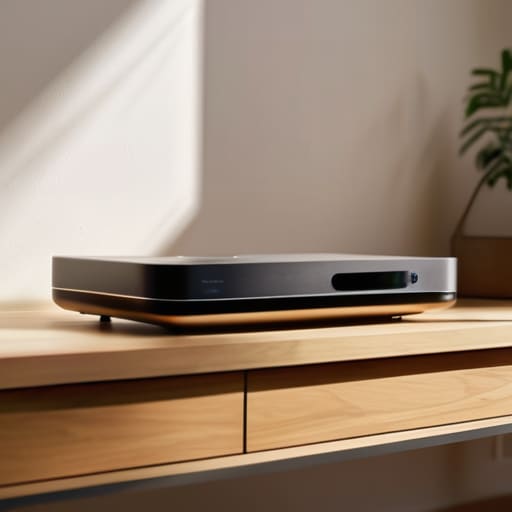
First things first, let’s talk about where your router actually lives. Most of us tuck it away in a corner, inside a media console, or behind a stack of books to keep things looking tidy. I get it—I love a clean aesthetic too—but your router needs room to breathe. Think of it like a lightbulb; if you hide it in a cupboard, the light won’t reach the corners of the room. For the best results, try to find a central, elevated location in your home. Getting it off the floor and away from thick walls or large metal objects will go a long way in helping you reduce wireless interference and spread that signal more evenly.
If you’ve already moved it and things still feel sluggish, you might need to look at your settings rather than your furniture. Most modern routers use two different lanes: wifi frequency bands 2.4GHz vs 5GHz. The 2.4GHz band is great for distance and going through walls, while the 5GHz band is much faster but has a shorter range. If you’re sitting right next to the router, aim for 5GHz; if you’re upstairs, 2.4GHz might be your best friend.
Reading Your Internet Speed Test Results Without the Stress

Once you finally run that test, you’re probably staring at a bunch of numbers—Mbps, ping, jitter—feeling like you’re back in a high school math class you never wanted to attend. Let’s strip the jargon away. When you look at your internet speed test results, the most important number is your download speed. That’s what dictates how easily you can stream a show or jump on a video call without the dreaded spinning loading icon. If that number is significantly lower than what you’re paying your provider for, we know we have a real bottleneck to address.
Don’t let the “ping” or “latency” numbers freak you out too much, but do keep an eye on them. A high ping means there’s a delay, which is a total nightmare if you’re trying to do anything time-sensitive. If the numbers look wonky, it might not be your provider’s fault; it could be that you need to optimize network bandwidth by checking which devices are hogging the connection. Think of it like a busy kitchen—if everyone is trying to use the same burner at once, dinner is going to take much longer to serve.
Five Quick Wins to Kick Your WiFi Into Gear
- Give your router a quick “power nap.” It sounds cliché, but unplugging your router for about thirty seconds and plugging it back in clears out the digital cobwebs and forces it to find a cleaner channel. It’s the simplest first step for a reason.
- Audit your “bandwidth hogs.” If you’re trying to work while someone else is streaming 4K movies in the next room or downloading a massive video game update, your connection is going to suffer. Check which devices are pulling the most data and see if you can throttle them during your peak hours.
- Switch your frequency. Most modern routers have two bands: 2.4GHz and 5GHz. Think of 2.4GHz like a slow, steady truck that can travel through walls easily, while 5GHz is like a fast sports car that can’t handle obstacles. If you’re close to the router, switch to 5GHz for that extra speed.
- Update your firmware. Just like your phone or laptop, your router needs software updates to run efficiently. Log into your router’s admin settings once in a while to see if there’s an update waiting; it often includes fixes for the exact performance lags you’re experiencing.
- Check your cables. Since I spend a lot of time tinkering with furniture, I know how much a loose connection can ruin a project. Make sure the ethernet cable running from your modem to your router is clicked in tight and isn’t frayed or pinched under a desk leg. A bad cable can bottleneck your entire system.
## A Quick Reality Check
“We tend to treat our WiFi like some mysterious, high-tech ghost in the machine, but most of the time, it’s just a matter of physics. You don’t need a degree in network engineering to fix a laggy connection; you usually just need to stop hiding your router behind a stack of books and start treating it like the essential tool it is.”
Elena Vance
Making Your Connection Work for You
At the end of the day, fixing slow WiFi isn’t about buying the most expensive, glowing gadget on the market or becoming a networking expert overnight. It’s really just about a few practical adjustments that make a massive difference. We’ve looked at how much a simple change in router placement can boost your signal, and we’ve demystified those confusing speed test numbers so you actually know what you’re looking at. If you’ve tried moving the router and checking your speeds and things still feel sluggish, don’t panic—it might just be time to call your provider or look into a simple mesh system. The goal is to stop troubleshooting and start connecting without the constant headache.
I know how frustrating it is when you’re just trying to finish a project or catch up on a show and the spinning loading icon becomes your new best friend. But remember, your home technology should serve you, not the other way around. You don’t need a high-tech command center to have a functional, reliable space; you just need a setup that actually works for your lifestyle. Take it one step at a time, keep things simple, and don’t let a little bit of lag steal your peace of mind. You’ve got this, and once you get this sorted, you can get back to the things that actually matter.


I believe that a well-run home shouldn't require a PhD or a massive budget. My goal is to strip away the complexity so you can focus on actually living in your space. Let's keep things practical, efficient, and genuinely useful.
View All Articles