
I spent years thinking that if I didn’t have a $150-a-month boutique gym membership and a color-coded meal prep container for every snack, I wasn’t “really” exercising. I fell for the myth that fitness has to be this massive, expensive production involving high-tech gear and intense, soul-crushing workouts. But honestly? That’s just a recipe for burnout. If you’re looking for how to build an exercise habit that actually survives the chaos of a real, busy life, you need to stop chasing the influencer version of health and start looking at what actually works when you’re tired, stressed, and short on time.
I’m not here to sell you a transformation program or a complicated six-week regimen. My goal is to show you how to strip away the fluff and find the small, sustainable wins that fit into your existing schedule. I’ll be sharing the practical, no-nonsense strategies I’ve used to stay moving—without needing a PhD in kinesiology or a second mortgage. We’re going to focus on simple, repeatable actions that turn movement from a daunting chore into just another seamless part of your day.
The Behavioral Psychology of Habit Formation Without the Fluff

Look, we don’t need a lecture on the behavioral psychology of habit formation, but we do need to understand why our brains keep trying to talk us out of a workout. Most of us fail because we try to go from zero to sixty overnight. We tell ourselves we’ll hit the gym for an hour every single day, and then, the moment life gets messy—which is always—we scrap the whole plan. The secret isn’t willpower; it’s about lowering the barrier to entry so much that it feels almost silly to say no.
Instead of aiming for perfection, focus on small wins in physical activity. If you can’t do a full session, do ten minutes of stretching or a quick walk around the block. This keeps the momentum alive without the mental exhaustion. I’ve found that habit stacking for fitness works wonders here, too. Pair your movement with something you already do, like a quick set of squats while your morning coffee brews. It stops being a “big production” and just becomes another part of your daily rhythm.
Using Habit Stacking for Fitness to Simplify Your Morning

If you’re like me, your mornings are usually a race against the clock between brewing coffee and finding your keys. The last thing I want to do is try to summon a massive wave of willpower to start a brand-new routine from scratch. This is where habit stacking for fitness becomes a total game-changer. Instead of treating exercise as a separate, daunting task, you simply “stack” it onto something you already do without thinking.
Think about your current morning flow. Maybe you always wait for the kettle to boil, or you always feed the dog right after you wake up. Instead of scrolling through your phone during those gaps, try doing ten air squats or a quick stretch. By anchoring a new movement to an existing anchor, you’re using the behavioral psychology of habit formation to do the heavy lifting for you. You aren’t fighting your brain; you’re just piggybacking on its existing tracks. It’s about those small wins in physical activity that eventually turn into a seamless part of your day, rather than another chore on an endless to-do list.
Five Ways to Keep It Real (and Actually Stick to It)
- Stop aiming for hour-long sessions. If you’re feeling overwhelmed, just commit to ten minutes of movement. It’s much easier to talk yourself into a quick stretch or a brisk walk around the block than a grueling gym session, and those small wins build the momentum you need.
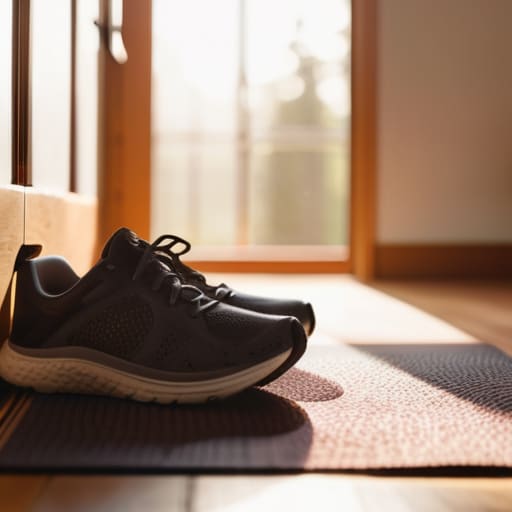
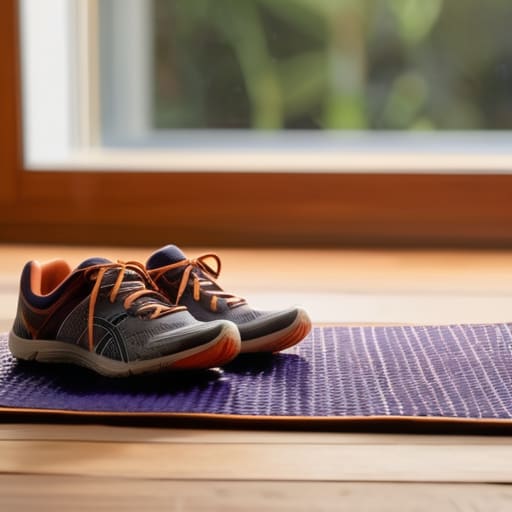
- Prep your gear the night before. I’ve learned the hard way that if I have to hunt for my sneakers or clean my yoga mat while I’m still half-asleep, I’m probably not going to do it. Lay your clothes out or pack your bag right by the door so there’s zero friction in the morning.
- Find your “low-barrier” movement. You don’t need a fancy boutique studio membership to stay active. Whether it’s a bodyweight circuit in your living room or a walk during a conference call, find something that fits into the cracks of your actual life, not a hypothetical version of it.
- Focus on consistency over intensity. I used to think if I wasn’t sweating through my shirt, it didn’t count. That’s nonsense. A mediocre workout that actually happens is infinitely better than the “perfect” workout that you keep rescheduling.
- Use a visual tracker that isn’t digital. There is something incredibly satisfying about physically marking an ‘X’ on a paper calendar or in my notebook. It turns your progress into something tangible that you can see, making it much harder to break the chain.
Keep It Real
“Stop waiting for a burst of motivation that might never show up. Instead, build a routine so small and so simple that it feels almost silly to skip it. Consistency isn’t about intensity; it’s about showing up when you’d rather not.”
Elena Vance
Keeping the Momentum
At the end of the day, building a fitness habit isn’t about finding a revolutionary new workout program or buying the most expensive gear on the market. It’s really about understanding how your brain works and working with your existing routine rather than fighting against it. We’ve talked about stripping away the mental clutter by using habit stacking and focusing on the actual psychology of why we stick to things. If you can master the art of showing up—even on the days when you only have ten minutes to spare—you’ve already won the hardest battle. Remember, the goal is consistency over intensity every single time.
I know how it feels to stare at a daunting to-do list and feel like adding “exercise” is just one more heavy weight on your shoulders. But please, give yourself some grace. You don’t need to be perfect to be successful; you just need to be persistent. Think of your new habit like one of those vintage furniture pieces I restore—it takes a bit of patience, some steady work, and a lot of smoothing out the rough edges, but the result is something that truly lasts. Stop waiting for the “perfect” moment to start and just take that first small, messy step today. You’ve got this.


I believe that a well-run home shouldn't require a PhD or a massive budget. My goal is to strip away the complexity so you can focus on actually living in your space. Let's keep things practical, efficient, and genuinely useful.
View All Articles